Compliance Over Competence: How Accreditation Pressures Are Reshaping Florida Health Education in the Wrong Direction

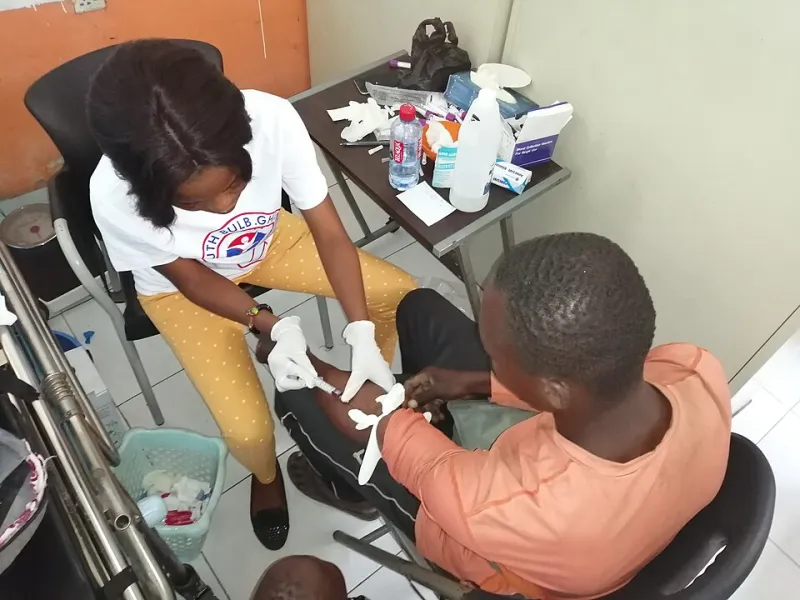
Photo: AB-Babayo, CC0, via Wikimedia Commons
There is a particular kind of exhaustion familiar to health education program directors in Florida. It is not the fatigue of teaching demanding material or managing stretched budgets. It is the weariness that comes from spending the better part of an academic year documenting, auditing, and aligning curricula to satisfy external standards that may bear only a partial resemblance to what students actually need when they enter the workforce.
"We spend an enormous amount of time on accreditation readiness," says one program director at a mid-sized Florida institution, who asked not to be identified by name. "And I genuinely believe in quality assurance. But when I look at where our faculty hours go, a significant portion is dedicated to demonstrating compliance rather than improving instruction. That's a problem."
This tension—between the structural requirements of accreditation and the practical demands of preparing health professionals—has become one of the more pressing, if underreported, challenges facing Florida's health education landscape.
The Architecture of Accreditation
Accreditation serves a legitimate and important function. For health education programs, external validation from bodies such as the Commission on Collegiate Nursing Education, the Liaison Committee on Medical Education, or discipline-specific accreditors provides assurance to students, employers, and the public that graduates have met a recognized threshold of preparation. Accreditation also determines eligibility for federal financial aid, making it functionally non-negotiable for most institutions.
The problem, as many educators describe it, is not accreditation itself but the way its requirements have calcified over time. Standards written to reflect the healthcare environment of a decade ago do not always map cleanly onto the competencies employers are seeking today. And when the gap between the two widens, institutions must make a choice: adapt the curriculum to meet current workforce needs, or preserve the curriculum to maintain accreditation standing.
In most cases, accreditation wins.
"You can't risk your accreditation status," explains a nursing program administrator at a Florida community college. "It's existential. So when you have to choose between piloting a new simulation-based learning module and completing your annual self-study documentation, the self-study takes priority. Every time."
What Gets Lost in the Compliance Calculus
The downstream effects of this prioritization are difficult to quantify but widely felt. Faculty describe pulling back from interdisciplinary collaborations because they fall outside accreditation-defined learning objectives. Curriculum committees report shelving proposals for community-embedded learning experiences because the outcomes are harder to measure against standardized rubrics. Students, meanwhile, sometimes graduate technically credentialed but underprepared for the ambiguity and complexity of actual clinical or public health environments.
A 2023 workforce survey conducted by a Florida hospital network found that a notable share of newly hired health professionals—regardless of their academic preparation—required extended onboarding to develop what hiring managers described as "adaptive clinical reasoning." That phrase is instructive. It suggests a gap not in technical knowledge, which accreditation frameworks do measure, but in the kind of flexible, context-sensitive problem-solving that structured curricula often struggle to cultivate.
"Accreditation measures inputs and some outputs," says a health sciences faculty member at a state university in Central Florida. "It counts contact hours, faculty credentials, pass rates. What it doesn't capture well is whether a student can walk into a complicated patient situation and think clearly. That's harder to put in a self-study report."
The Innovation Deficit
Perhaps the most consequential byproduct of compliance-heavy culture is what might be called an innovation deficit. Educators who might otherwise experiment with problem-based learning, team-based care simulations, or community health practicum models often describe feeling constrained by accreditation timelines and approval processes.
Introducing a substantive curriculum change at an accredited program is rarely a simple matter. It frequently requires formal notification to the accrediting body, documentation of how the change aligns with existing standards, and in some cases a site visit or interim review. For institutions already stretched thin on administrative capacity, the transaction cost of innovation can be prohibitive.
"We had a proposal to integrate more telehealth training into our curriculum two years before the pandemic," recalls one program director in South Florida. "By the time we worked through the accreditation implications, COVID had arrived and telehealth was suddenly everywhere. We were playing catch-up on something we'd tried to get ahead of."
This lag between educational innovation and accreditation approval is not unique to Florida, but the state's scale—and the diversity of its healthcare workforce needs, from rural panhandle communities to densely populated urban centers—makes the rigidity particularly costly.
Voices From the Field
Program directors navigating these pressures are not, by and large, critics of accreditation as a concept. Most express genuine appreciation for the quality framework it provides. Their frustration is more targeted: they want accreditation systems that reward demonstrated student outcomes rather than procedural conformity.
"If my graduates are passing licensure exams, securing employment, and being rated highly by their employers, that should carry significant weight," says one director. "Instead, I sometimes feel like the accreditor is more interested in whether my syllabus format matches their template than whether my students are actually succeeding."
There is growing momentum within some accrediting bodies to shift toward outcomes-based frameworks that offer institutions more flexibility in how they achieve defined competency benchmarks. Several national health education associations have begun advocating for this model, and a handful of Florida programs have participated in pilot initiatives exploring more adaptive accreditation structures.
But progress is incremental, and the day-to-day reality for most Florida health education programs remains one of careful navigation between innovation and compliance.
A Path Forward
Addressing the accreditation trap will require coordinated effort across multiple stakeholders. Accrediting bodies must continue moving toward frameworks that prioritize measurable student outcomes over procedural checklists. Florida's health education institutions, for their part, should invest in dedicated administrative support for accreditation management—freeing faculty to focus on instruction rather than documentation.
State-level advocacy also has a role to play. Professional organizations and health education networks in Florida are well-positioned to engage accrediting bodies on behalf of member institutions, helping to surface local workforce data that can inform standard revisions.
Most importantly, the conversation must remain centered on students. Accreditation was designed to protect their interests. When it begins to work against those interests—constraining the very educational experiences that would best prepare them for a complex, evolving healthcare environment—reform is not just warranted. It is overdue.
Florida's health education programs are home to talented, committed faculty and administrators doing genuinely important work. They deserve an accreditation framework that supports their best instincts, not one that papers over them.