Trained Apart, Expected to Work Together: The Interprofessional Education Crisis in Florida Health Programs
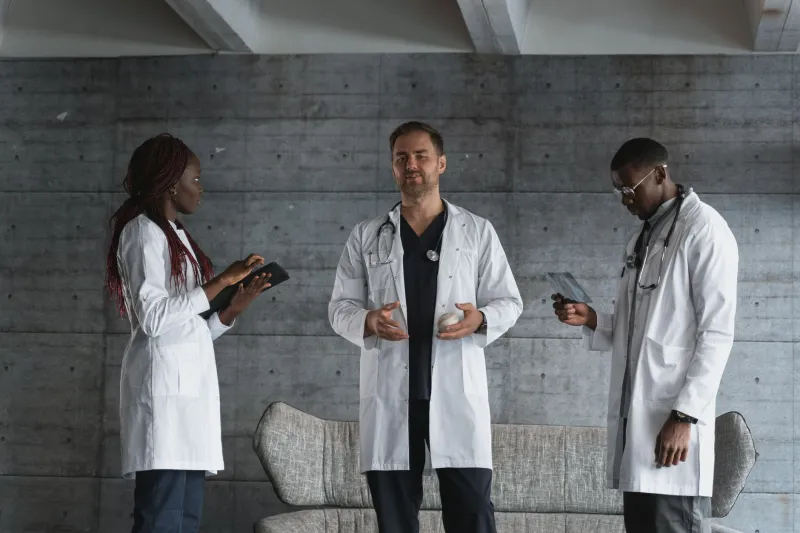
When a patient arrives in a Florida hospital with a complex, multi-system condition, their care is rarely managed by a single clinician. A physician may direct the treatment plan, but it is the nurse monitoring vital signs, the respiratory therapist adjusting ventilator settings, the pharmacist reviewing drug interactions, and the physical therapist planning early mobility who collectively determine whether that patient recovers well or poorly. Healthcare, at its functional core, is a team endeavor.
Yet the educational systems that produce these professionals continue to operate as though each discipline exists in isolation. Nursing students sit in nursing classrooms. Respiratory therapy students train in respiratory therapy labs. Physical therapy students complete their clinical rotations in physical therapy departments. The result is a workforce that understands its own role with considerable depth but frequently struggles to communicate, coordinate, or collaborate meaningfully with colleagues trained in other disciplines.
This is not a minor inconvenience. It is a patient safety issue, a workforce efficiency problem, and an institutional failure that Florida's health education community must address with urgency.
The Architecture of Isolation
The roots of disciplinary silos in health education run deep. Accreditation standards, faculty hiring structures, clinical placement agreements, and even building layouts often reinforce separation rather than integration. A college of nursing and a respiratory therapy program housed within the same institution may share a parking lot but almost nothing else—not instructors, not simulation scenarios, not assessment frameworks.
This separation is partly historical. Each health profession developed its own credentialing body, its own scope-of-practice regulations, and its own educational standards over decades. The infrastructure built around those standards was not designed with collaboration in mind. It was designed for efficiency within a single discipline, and it has proven remarkably resistant to change.
The professional culture that emerges from siloed training compounds the structural problem. Students who have never been asked to work alongside peers from other health disciplines arrive in clinical settings without the vocabulary, the habits, or the confidence to function as team members. They may understand their own protocols precisely while remaining uncertain about when and how to communicate a concern to a colleague in a different role. That uncertainty has consequences. Research consistently links poor interprofessional communication to medication errors, delayed diagnoses, and preventable patient harm.
What Genuine Interprofessional Education Looks Like
Interprofessional education, or IPE, is not simply scheduling a joint lecture or arranging for nursing and pharmacy students to attend the same seminar. Genuine IPE requires shared learning experiences designed to build specific collaborative competencies: mutual respect for professional roles, structured communication practices, shared decision-making, and the capacity to navigate disagreement constructively.
The Interprofessional Education Collaborative, a national body representing health professions schools across the United States, has articulated a core competency framework that many institutions reference. But referencing a framework and embedding it meaningfully into curriculum design are very different activities. The former requires a committee meeting. The latter requires rethinking schedules, renegotiating faculty responsibilities, redesigning simulation scenarios, and sometimes confronting institutional politics that resist change.
Several Florida institutions have undertaken exactly that work. At the University of Florida's Health Science Center in Gainesville, interprofessional simulation exercises bring together students from medicine, nursing, pharmacy, and health administration to manage standardized patient scenarios requiring coordinated responses. Debriefing sessions following these exercises are structured to surface not just clinical decisions but communication breakdowns—moments where information failed to transfer, where role assumptions created friction, where hierarchy inhibited a student from raising a concern.
Florida International University's Herbert Wertheim College of Medicine has similarly incorporated team-based learning structures that place medical students in sustained contact with peers from other health programs, emphasizing the relational dimensions of collaborative care rather than treating teamwork as a soft skill that professionals will figure out on their own.
These programs are not anomalies, but they remain exceptions in a landscape that still defaults to siloed instruction.
The Curriculum Changes That Would Make a Difference
For institutions ready to move beyond isolated discipline training, several practical curriculum adjustments offer meaningful impact without requiring a complete programmatic overhaul.
Shared simulation scenarios represent one of the most accessible entry points. When nursing and respiratory therapy students manage a simulated respiratory distress case together—with each group responsible for its own scope while being required to communicate and coordinate in real time—both groups develop skills that no discipline-specific simulation can replicate. The friction, the negotiation, and the occasional miscommunication that arise in these exercises are not problems to be eliminated. They are the learning.
Joint case-based seminars offer another avenue. Faculty from two or more disciplines co-facilitating a case discussion exposes students to the way different professionals frame the same clinical situation, prioritize different data points, and arrive at recommendations through distinct reasoning processes. That exposure builds the kind of professional empathy that makes real-world team communication more fluent.
Structured clinical placement integration is more logistically demanding but potentially the most transformative. When students from different disciplines complete portions of their clinical hours in the same settings with explicit interprofessional learning objectives—and when preceptors are trained to facilitate those objectives rather than simply supervise discipline-specific tasks—the gap between educational preparation and clinical reality narrows substantially.
Assessment reform is equally important. If collaborative competencies are not evaluated, they will not be taken seriously by students, faculty, or program administrators. Incorporating interprofessional communication skills into formal assessment frameworks sends an institutional signal that teamwork is not supplementary to clinical education. It is central to it.
The Role of Statewide Coordination
Individual institutions working in isolation can make meaningful progress, but systemic change in Florida's health education landscape requires coordination at a broader level. Organizations positioned to facilitate cross-institutional dialogue, share curriculum models, and advocate for accreditation standards that incentivize interprofessional learning have a critical role to play in accelerating adoption.
Florida's geographic and demographic diversity adds another dimension to this challenge. Programs serving rural communities, safety-net hospitals, and underresourced clinical settings may face different barriers to IPE implementation than those affiliated with large academic medical centers. Statewide frameworks for interprofessional education must account for this variation rather than assuming that a model developed at a research university will translate directly to a community college health program in a rural county.
The state's healthcare workforce needs are also evolving rapidly. Population growth, an aging demographic, and persistent workforce shortages across multiple disciplines mean that Florida cannot afford to produce graduates who are technically proficient but functionally unprepared for team-based care environments. The cost of that unpreparedness is borne not only by health systems managing onboarding gaps but ultimately by patients who receive fragmented, poorly coordinated care.
A Necessary Shift in How We Define Readiness
For too long, clinical readiness in Florida health education has been defined almost exclusively in disciplinary terms: Can this student perform the skills required of their credential? That is a necessary question, but it is not a sufficient one. The more complete question is: Can this student perform those skills while communicating effectively with colleagues from other disciplines, contributing to shared decision-making, and supporting the kind of coordinated care that patients in complex healthcare environments actually require?
Answering yes to the fuller question demands more from curriculum designers, program directors, faculty, and clinical partners. It demands more from accrediting bodies willing to hold programs accountable for collaborative competencies. And it demands a willingness to treat interprofessional education not as an enrichment activity added to an already crowded curriculum but as a foundational commitment woven through the entire educational experience.
Florida has the institutional capacity, the clinical infrastructure, and the professional community to lead on this issue. The programs already doing this work demonstrate that the barriers, while real, are not insurmountable. What is required now is the collective will to stop training students apart and start preparing them to work together.