Beyond the Mannequin: Why Florida's Simulation Labs Are Failing to Prepare Students for Clinical Ambiguity
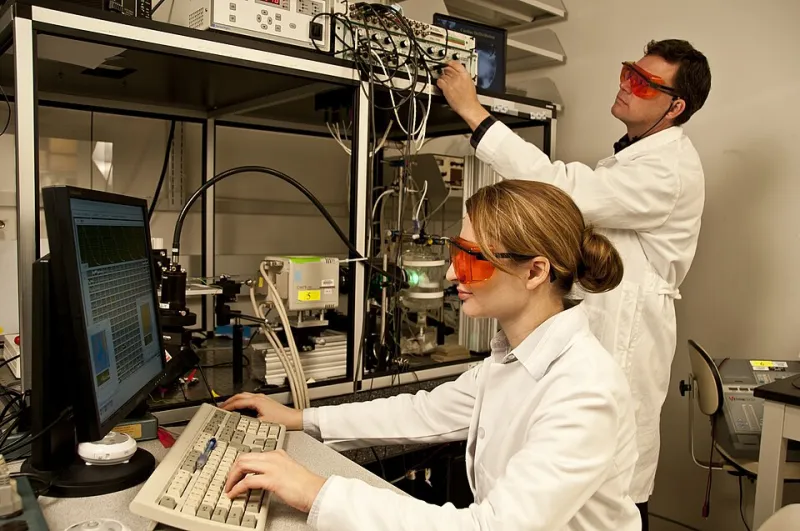
Photo: The U.S. Food and Drug Administration, Public domain, via Wikimedia Commons
Florida's health education institutions have invested substantially in simulation infrastructure over the past decade. High-fidelity mannequins, standardized patient programs, and immersive clinical environments now populate the campuses of nursing schools, medical colleges, and allied health programs from Pensacola to Miami. By most observable metrics, the state's commitment to simulation-based learning has been impressive.
Yet a troubling pattern is emerging in clinical training sites, residency programs, and entry-level healthcare settings throughout Florida: graduates who demonstrate procedural precision in the lab frequently struggle when confronted with scenarios that do not follow a predictable arc. The mannequin never lies. The real patient almost always does — not deliberately, but through the inherent complexity of human illness, incomplete histories, contradictory symptoms, and the moral weight of decisions made with imperfect information.
The question Florida health educators must now grapple with is not whether simulation works, but whether the way it is being used is actually preparing students for the profession they are entering.
The Procedural Trap
Simulation, at its best, offers a consequence-free environment in which students can rehearse clinical skills, build muscle memory, and encounter high-stakes scenarios without risk to actual patients. These are genuine and significant advantages. The problem arises when simulation is designed primarily around procedural checklists — when the measure of success becomes whether a student correctly placed an IV line or followed the correct sequence in a cardiac arrest protocol.
Clinical competence requires more than procedural accuracy. It demands the capacity to function under cognitive load, to make defensible decisions when the evidence is ambiguous, to navigate ethical tensions when no option is clearly right, and to communicate meaningfully with patients and colleagues under pressure. These are not skills that emerge automatically from repeated procedural rehearsal.
Faculty and clinical supervisors across Florida have noted that students trained primarily in checklist-driven simulation environments tend to experience what some describe as a "decision paralysis" when clinical presentations deviate from the expected pattern. They wait for the scenario to resolve itself into something recognizable rather than exercising the judgment required to act on incomplete data.
What the Research Suggests
National and international literature on simulation-based health education has increasingly turned its attention to this gap. Studies published in journals focused on medical and nursing education consistently find that while simulation improves technical skill acquisition, its impact on clinical reasoning — particularly in ambiguous or ethically complex scenarios — is significantly weaker unless the simulation is explicitly designed to cultivate that capacity.
The distinction matters enormously. A student can learn to insert a catheter through repetition. Learning to recognize when a patient's behavioral cues suggest that something beyond the presenting complaint requires attention is a fundamentally different cognitive and interpersonal task. It is one that resists easy measurement and does not lend itself to a rubric with clear pass/fail criteria.
For Florida programs that operate under accreditation frameworks emphasizing measurable outcomes, this creates a structural incentive problem. What gets assessed tends to get taught. What cannot be easily assessed — nuanced judgment, ethical reasoning under pressure, tolerance for uncertainty — tends to receive less instructional attention, even when educators privately acknowledge its importance.
Programs Choosing a Different Path
Not all Florida institutions are accepting this limitation as inevitable. A number of programs have begun deliberately redesigning their simulation curricula to introduce what educators in the field sometimes call "productive discomfort" — scenarios that are intentionally incomplete, morally ambiguous, or resistant to clean resolution.
At one state university health sciences program in Central Florida, faculty have incorporated what they describe as "deliberate ambiguity protocols" into their advanced simulation sequences. Rather than presenting students with scenarios that have a clearly correct response, these exercises feature conflicting patient histories, family members with competing interests, resource constraints that force prioritization decisions, and clinical data that points in more than one direction simultaneously. Debriefing sessions following these exercises focus not on whether students made the "right" choice, but on the quality of their reasoning process and their ability to articulate the ethical considerations they weighed.
A nursing program in South Florida has taken a related approach, embedding ethics consultation simulations into its curriculum in partnership with a regional hospital system. Students are placed in scenarios where they must engage with ethics committee frameworks, navigate disagreements between care team members, and communicate difficult information to patients and families — all within a simulated environment designed to feel as socially and emotionally realistic as possible.
These approaches share a common premise: that preparing students for clinical practice means preparing them for the experience of not knowing, not just the experience of knowing and executing.
The Faculty Development Dimension
Redesigning simulation curricula in this direction requires more than updated scenarios. It requires faculty who are themselves comfortable facilitating discussions that do not have predetermined correct answers — and who have the pedagogical skills to guide students through the discomfort of uncertainty without resolving it prematurely.
This is a professional development challenge that Florida health education institutions have not yet addressed systematically. Many simulation educators were trained in environments that prioritized technical accuracy, and the facilitation skills required for debriefing ethically complex or cognitively ambiguous scenarios represent a distinct and underserved area of faculty preparation.
Organizations supporting health education across Florida have a meaningful role to play here. Developing frameworks for faculty training in uncertainty-centered simulation facilitation, creating shared repositories of ambiguity-driven scenario designs, and fostering peer learning communities among simulation educators would each contribute to closing the gap between what simulation currently delivers and what clinical practice actually demands.
Redefining Readiness
The broader conversation about simulation and clinical readiness ultimately requires a more honest reckoning with what "graduate readiness" means in Florida health education. If readiness is defined as the ability to perform a checklist correctly under observed conditions, current simulation models are largely succeeding. If readiness means the capacity to reason through a situation no textbook has described, to hold competing ethical obligations in tension, and to act with appropriate confidence despite incomplete information, the current model has significant room to grow.
Florida's health education community has demonstrated that it can build world-class simulation infrastructure. The next challenge is ensuring that the learning happening inside those facilities reflects the full complexity of the clinical world students are about to enter. The mannequin can be scripted. The patient cannot.
Advancing that shift — from simulation as procedural rehearsal to simulation as a genuine preparation for the ambiguity of practice — is among the most important professional development imperatives facing Florida health educators today.