The 2024–2025 Health Education Briefing: Five Topics Florida Educators Cannot Afford to Overlook
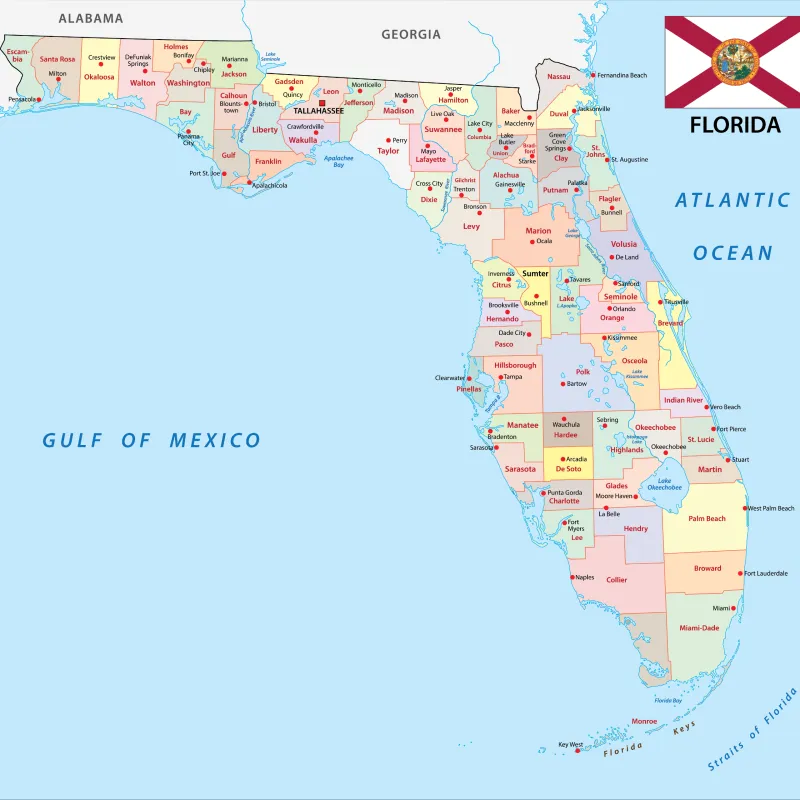
Photo: Florida health educator professional development training workshop, via www.mappr.co
Teaching health in Florida has never been a static endeavor. The state's unique demographic complexity, its position as a major international travel hub, its aging population, and its history of both natural disasters and public health emergencies all conspire to keep health educators in a constant state of professional recalibration. What worked in the curriculum two years ago may be insufficient today.
As FLAHEC Network continues its work of advancing health education across the state, we hear consistently from educators who want clear, practical guidance on where to focus their professional development energy. In that spirit, we present five health topics that have moved decisively to the forefront of Florida's educational landscape for 2024–2025—along with context for why each matters here specifically and where educators can turn for current, credible resources.
1. Mental Health Crisis Intervention: Moving From Awareness to Action
Florida has grappled with a youth mental health crisis that predates the pandemic but was dramatically accelerated by it. The state consistently ranks among the lowest in the nation for mental health care access relative to need, according to Mental Health America's annual State of Mental Health in America report. School-based educators, community health workers, and clinical instructors are increasingly being called upon not merely to acknowledge mental health as a topic but to intervene effectively when a student or community member is in acute distress.
The distinction matters. General mental health awareness—knowing the signs of depression, understanding stigma—remains important. But 2024–2025 demands a step further: practical competency in crisis de-escalation, suicide risk assessment frameworks like the Columbia Protocol, and knowledge of Florida's specific referral pathways and Baker Act procedures.
Why Florida specifically: The state's Baker Act—which allows for involuntary psychiatric examination—is invoked hundreds of thousands of times annually, with a disproportionate number involving minors. Educators who understand this law and can help students, families, and colleagues navigate it are providing a genuinely life-saving service.
Resources to explore: Mental Health First Aid USA offers an eight-hour certification course available in both in-person and hybrid formats. The Florida Department of Children and Families maintains a crisis resource directory updated by county. FLAHEC Network periodically offers regional trainings on mental health topics for health profession students and educators.
2. Chronic Disease Prevention in Diverse Populations: Tailoring the Message
Florida is one of the most ethnically and linguistically diverse states in the country, and that diversity is not uniform. South Florida's Cuban and Haitian communities, the Puerto Rican population concentrated in Central Florida, the agricultural workforce in Immokalee, and the growing number of West African immigrants in the Tampa Bay area each carry distinct health risk profiles, cultural frameworks for understanding illness, and barriers to preventive care.
Chronic diseases—type 2 diabetes, hypertension, cardiovascular disease, and obesity-related conditions—remain the leading drivers of morbidity and healthcare cost in Florida. But one-size-fits-all prevention messaging has consistently underperformed in diverse communities. Culturally responsive chronic disease education requires educators to understand not just the clinical content but the social determinants, dietary traditions, religious considerations, and historical experiences with healthcare systems that shape how different populations receive and act on health information.
Why Florida specifically: Florida's diabetes prevalence rate exceeds the national average, and disparities by race and ethnicity are pronounced. Black Floridians are nearly twice as likely to be diagnosed with diabetes as white Floridians, and Hispanic adults face elevated risk for several metabolic conditions. Educators who can adapt prevention curricula for these realities will have far greater impact.
Resources to explore: The Centers for Disease Control and Prevention's National Diabetes Prevention Program offers a framework adaptable for diverse settings. The National Alliance for Hispanic Health publishes Spanish-language resources on chronic disease management. FLAHEC Network's regional area health education centers can connect Florida educators with locally adapted materials and subject-matter experts.
3. Health Equity Training: From Concept to Competency
Health equity has moved from a background principle to a foreground professional requirement. Accreditation bodies, healthcare employers, and funding agencies across Florida increasingly expect health educators and health professionals to demonstrate not just familiarity with equity concepts but genuine competency in applying them—in curriculum design, in patient communication, and in organizational advocacy.
This shift reflects a broader recognition that health disparities are not random. They are the predictable result of structural conditions: housing instability, food insecurity, environmental hazards concentrated in low-income neighborhoods, and systemic biases embedded in clinical practice. Educators who can help future health professionals understand these dynamics—and develop the tools to address them—are preparing a workforce that is genuinely equipped for the communities it will serve.
Why Florida specifically: Florida's demographic projections indicate that by 2030, no single racial or ethnic group will constitute a majority of the state's population. Health systems that fail to close equity gaps will face compounding workforce and outcomes challenges. Educators are a critical leverage point.
Resources to explore: The American Public Health Association's Center for Health Equity offers webinars and toolkits. The Robert Wood Johnson Foundation's Culture of Health resources are freely accessible and curriculum-ready. Nationally, the Unequal Treatment report from the National Academies of Sciences, Engineering, and Medicine remains an essential reference document for health equity education.
4. Emerging Infectious Disease Awareness: Staying Ahead of the Curve
Florida's climate, its role as a port of entry for international travelers and cargo, and its large population of immunocompromised residents make it a state where infectious disease vigilance is not optional. The post-COVID period has brought renewed attention to pathogen surveillance, but the specific threats on educators' radar in 2024–2025 extend well beyond familiar territory.
Dengue fever has re-established local transmission in South Florida. Mpox remains a concern in communities with limited healthcare access. Influenza strain variability continues to challenge vaccine communication. And the broader category of antimicrobial resistance—while less visible in daily headlines—represents a slow-moving public health emergency that health educators are uniquely positioned to address through antibiotic stewardship messaging.
For educators, the task is not to create alarm but to build durable frameworks for understanding how new and re-emerging pathogens behave, how surveillance systems function, and how communities can respond proportionately and effectively.
Why Florida specifically: The Florida Department of Health's Bureau of Epidemiology tracks disease trends in real time, and Florida's data frequently precedes national trend lines given the state's unique exposure patterns. Being conversant with this data makes Florida educators more credible and more effective.
Resources to explore: The CDC's Clinician Outreach and Communication Activity (COCA) provides free continuing education on emerging infectious diseases. ProMED, the global infectious disease monitoring network, offers accessible outbreak alerts. The Florida Department of Health's weekly epidemiology report is publicly available and an invaluable local reference.
5. Substance Use Disorder Education: Integrating the Latest Science
Florida has been among the states hardest hit by the opioid epidemic, and the landscape continues to evolve. Fentanyl and its analogs now account for the majority of overdose deaths statewide. Polysubstance use is increasingly common. And the social profile of individuals affected by substance use disorder has broadened considerably—challenging educators to move beyond outdated stereotypes and toward a genuinely science-based, destigmatizing approach.
The medical consensus has shifted substantially in recent years. Medication-assisted treatment (MAT) with buprenorphine, methadone, or naltrexone is now recognized as the evidence-based standard of care for opioid use disorder. Harm reduction strategies—including naloxone distribution and fentanyl test strips—have demonstrated effectiveness in reducing overdose mortality. Health educators who are not current on these developments risk perpetuating approaches that are at best ineffective and at worst harmful.
Why Florida specifically: Florida's overdose death rate has risen sharply over the past five years, with rural counties often experiencing the steepest increases. Educators in these communities may be among the first to recognize patterns of use and the first to connect individuals with treatment resources.
Resources to explore: The Substance Abuse and Mental Health Services Administration (SAMHSA) offers a comprehensive treatment locator and free training resources for educators. The Florida Alcohol and Drug Abuse Association (FADAA) provides state-specific professional development. Naloxone training is available through many Florida health departments at no cost.
Staying Current in a Changing Landscape
No educator can master every emerging topic simultaneously, and no one should feel that expectation is reasonable. What matters is building habits of continuous learning—engaging with peer networks, attending regional trainings, and leaning on organizations like FLAHEC Network that exist precisely to support Florida's health education workforce.
The five areas outlined here are not exhaustive, but they represent the intersections of urgency and opportunity that define this particular moment in Florida's public health story. Educators who invest in these competencies will be better prepared to serve their students, their communities, and the broader goal of a healthier, more equitable Florida.