Closing the Distance: How Florida's Rural Communities Are Fighting for Health Education Equity
Photo: Don Ramey Logan, CC BY-SA 4.0, via Wikimedia Commons
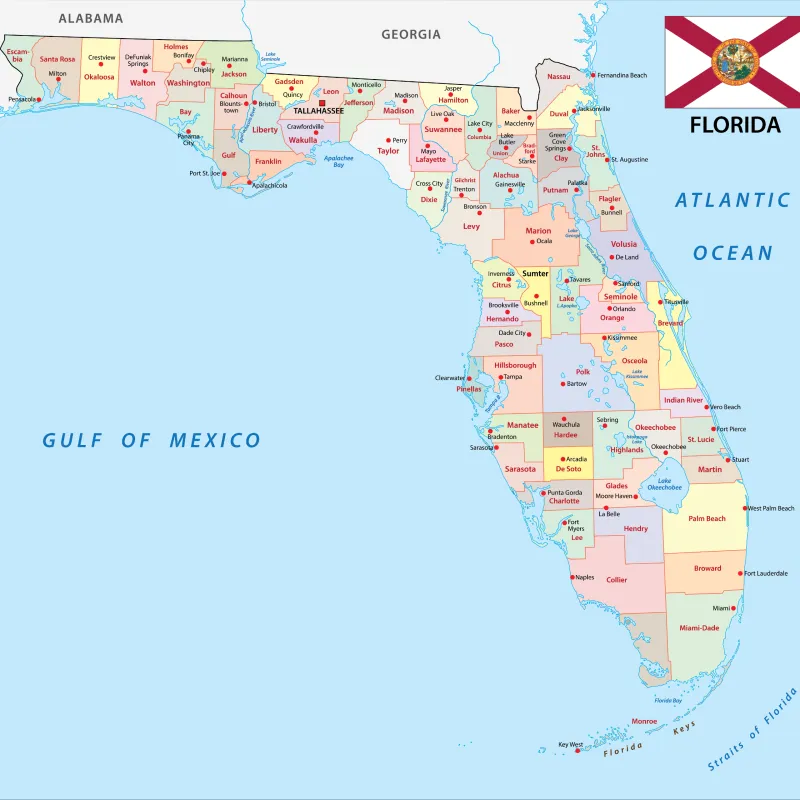
Florida's popular image—sun-drenched coastlines, bustling theme parks, and thriving metropolitan hubs—tells only part of the state's story. Venture inland to the agricultural counties of the Panhandle, the communities nestled along the Big Bend, or the rural stretches of the Heartland region, and a starkly different picture emerges. Here, access to quality health education is not a given. It is a privilege shaped by ZIP code, income level, and the reliability of a Wi-Fi connection.
For organizations like FLAHEC Network, whose mission centers on advancing health education across Florida, these disparities are not abstract policy problems. They are lived realities that affect patient outcomes, workforce readiness, and community resilience. Understanding the depth of the gap—and the solutions gaining traction—is essential for everyone working at the intersection of education and public health.
The Scope of the Problem
Approximately 3.5 million Floridians reside in rural or semi-rural areas, many of which are classified as Health Professional Shortage Areas (HPSAs) by the federal Health Resources and Services Administration. These designations reflect not only a scarcity of physicians and nurses but also a broader deficit in health literacy infrastructure—the educators, community health workers, and digital resources that help residents understand and navigate their own care.
Broadband connectivity compounds the challenge significantly. According to the Florida Department of Economic Opportunity, tens of thousands of households in rural counties lack access to reliable high-speed internet, effectively locking residents out of the telehealth platforms, online continuing education modules, and digital health portals that have become standard tools in urban settings. When a community health worker in Jefferson County cannot stream a training webinar, or when a family in Glades County cannot access a multilingual health literacy resource online, the gap between intention and impact becomes painfully clear.
Economic barriers layer on top of connectivity issues. Rural Florida households are disproportionately represented among the uninsured and underinsured, and low-income adults are statistically less likely to engage with formal health education programs—not out of disinterest, but because of competing demands: shift work, transportation limitations, and the cost of childcare during evening classes.
What's Working: Promising Models on the Ground
Despite these obstacles, several initiatives are demonstrating that meaningful progress is achievable when organizations commit to meeting communities where they are.
Telehealth-Integrated Education Partnerships
Across North and Central Florida, FLAHEC-affiliated programs have collaborated with federally qualified health centers (FQHCs) to embed health education components directly into telehealth encounters. Rather than treating clinical care and health literacy as separate tracks, these integrated models allow clinicians to share educational materials in real time during virtual appointments—reinforcing medication adherence, chronic disease management, and preventive care in a context patients are already engaged with. Pilot programs in Suwannee and Hamilton counties have reported measurable improvements in patient recall of care instructions within 90 days of implementation.
Mobile Health Education Units
Borrowing a model long used in mobile mammography and dental care, several Florida health education coalitions have deployed mobile units staffed by community health educators. These vehicles travel to farm labor camps, rural churches, and county fairs—spaces where trust has already been established—to deliver workshops on topics ranging from diabetes prevention to mental health first aid. The informality of these settings often proves more effective than clinic-based education for populations with historical reasons to distrust formal healthcare institutions.
Community Health Worker (CHW) Pipeline Programs
One of the most sustainable solutions lies in training local residents to serve as health educators within their own communities. FLAHEC Network has long championed CHW pipeline initiatives that recruit from rural areas, provide bilingual training curricula, and connect graduates with employment pathways at local health departments and nonprofits. Individuals who share language, culture, and lived experience with their neighbors are uniquely positioned to translate complex health information into actionable guidance. In Hendry County, a CHW cohort trained through a FLAHEC-supported program has been credited with increasing preventive screening rates among the county's predominantly Hispanic agricultural workforce.
Hybrid Learning Infrastructure
Recognizing that full online delivery is not universally viable, some programs have adopted hybrid models that combine asynchronous digital content with scheduled in-person sessions at community anchor institutions—libraries, extension offices, and rural health clinics. Participants download or receive printed materials in advance, then gather for facilitated discussion and hands-on skill practice. This approach acknowledges bandwidth limitations while preserving the relational elements that make health education stick.
Case Study: The Panhandle Health Literacy Initiative
In 2022, a coalition of rural health stakeholders in Florida's Panhandle region launched a coordinated health literacy campaign targeting adults with limited formal education. The initiative, supported in part by FLAHEC Network, trained 48 local educators and community volunteers across six counties in plain-language health communication techniques. Materials were developed in both English and Spanish, with a third set of resources tailored for speakers of Haitian Creole—reflecting the region's evolving demographic profile.
Within eighteen months, participating counties reported a 22 percent increase in enrollment in chronic disease self-management programs and a notable uptick in adults seeking preventive screenings they had previously deferred. Program coordinators attributed the gains not to any single intervention but to the cumulative effect of trusted messengers, accessible formats, and persistent community presence.
Recommendations for Policymakers and Educators
The evidence from Florida and comparable rural states points toward several actionable priorities:
-
Expand broadband access as a health infrastructure priority. Federal and state broadband investment programs should explicitly recognize connectivity as a social determinant of health, with rural health education access included as a measurable outcome metric.
-
Fund sustainable CHW programs with career ladder support. Short-term grant cycles undermine the continuity that CHW programs require. Multi-year funding commitments, paired with credentialing pathways, are essential to workforce retention.
-
Center community voice in curriculum design. Health education materials developed without input from the populations they serve often miss the mark culturally and linguistically. Co-design processes that include rural residents from the outset produce more effective, more trusted resources.
-
Incentivize rural placement for health educators. Loan repayment programs and stipends modeled on those available to rural physicians should be extended to health educators and community health workers who commit to underserved areas.
-
Measure health literacy outcomes, not just program participation. Funders and program administrators should require longitudinal data on health knowledge and behavior change, not simply attendance figures.
The Path Forward
Bridging Florida's rural health education divide will not happen through any single program or policy. It requires a sustained, coordinated commitment from state agencies, health systems, academic institutions, and community organizations—working in genuine partnership with the residents most affected by these gaps. FLAHEC Network remains committed to supporting that work: training educators, facilitating partnerships, and advocating for the systemic changes that rural Floridians deserve.
Health literacy is not a luxury. It is a foundation for informed decision-making, equitable care, and healthier communities. Every Floridian—regardless of county, connectivity, or income—deserves access to it.