Learning by Doing: Florida's Health Education Partnerships That Are Redefining Student Readiness
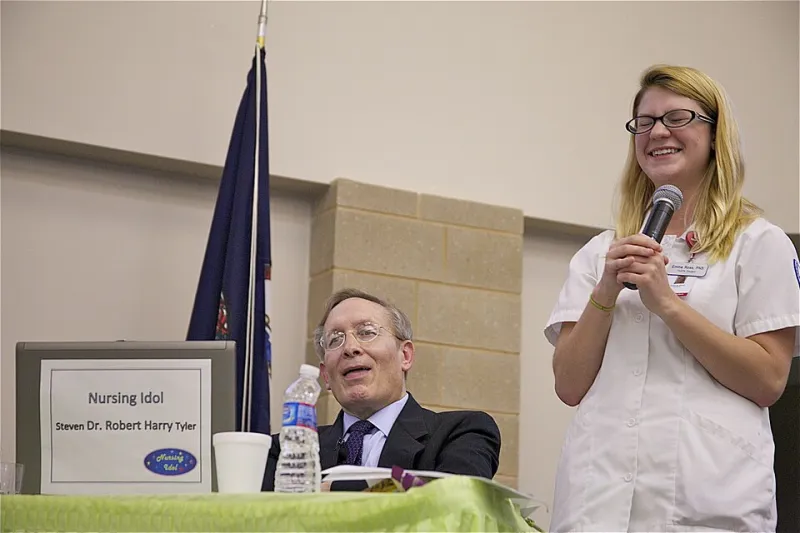
Photo: Germanna CC, CC BY 2.0, via Wikimedia Commons
For decades, health education in Florida classrooms followed a familiar arc: lecture, textbook, examination, repeat. Students absorbed foundational knowledge, passed their assessments, and graduated into a healthcare landscape that often felt foreign compared to what they had studied. The gap between academic preparation and professional expectation has long been acknowledged, but only recently have Florida institutions begun to close it in meaningful, systematic ways.
Through structured partnerships between educational programs and healthcare providers, a new generation of Florida health educators and students is gaining access to something no textbook can fully replicate: real-world experience.
Why Theory Alone Is No Longer Sufficient
The demands placed on today's healthcare workforce are considerably more complex than those of even a decade ago. Practitioners are expected to navigate electronic health records, communicate across cultural and linguistic barriers, address social determinants of health, and make rapid decisions in high-pressure environments. These competencies are difficult to cultivate in a traditional classroom setting.
Health educators across Florida have increasingly recognized this limitation. At the same time, healthcare providers — from community health centers to large hospital systems — have expressed a consistent need for graduates who arrive with practical skills and situational awareness. The alignment of these two interests has created fertile ground for experiential learning partnerships.
According to workforce development professionals within the FLAHEC Network, institutions that have formalized these collaborations report measurable improvements in student competency scores, clinical preceptor satisfaction, and post-graduation employment rates. The evidence is difficult to ignore.
Case Study: A Community College and a Federally Qualified Health Center
One of the more replicable models emerging in Florida involves partnerships between community colleges and Federally Qualified Health Centers (FQHCs). These safety-net facilities serve populations with complex health needs, offering students exposure to a wide range of conditions, social challenges, and care coordination requirements that would be difficult to simulate in a lab.
In one such arrangement in Central Florida, health education students rotate through an FQHC for a structured eight-week placement embedded within their coursework. Faculty from the college maintain close communication with clinic supervisors, and students submit reflective journals that tie clinical observations back to classroom concepts. The result is a continuous feedback loop between theory and practice.
Clinic directors involved in similar programs have noted that students who complete these rotations demonstrate stronger patient communication skills and a more nuanced understanding of health equity than their peers who completed traditional coursework alone. For the health centers, the arrangement also provides a pipeline of potential future employees who are already familiar with the organization's patient population and workflows.
What Educators Are Saying
Health educators who have helped design and sustain these partnerships point to several factors that determine success. First and foremost is institutional commitment. Programs that receive nominal administrative support tend to falter when scheduling conflicts arise or when funding becomes uncertain. By contrast, partnerships anchored in formal memoranda of understanding — with dedicated faculty liaisons and protected student placement hours — demonstrate far greater longevity.
Second, educators emphasize the importance of intentional curriculum integration. A clinical placement that operates independently of classroom instruction offers students experience but limited learning consolidation. When instructors actively incorporate students' clinical observations into class discussions, case analyses, and assessments, the educational value multiplies substantially.
Third, mentorship quality matters enormously. Healthcare professionals who supervise students must be prepared not only to model clinical skills but also to guide reflection and tolerate the learning curve that comes with early-stage practitioners. Some Florida institutions have begun offering brief training sessions for clinical preceptors, covering adult learning principles and effective feedback techniques — a practice FLAHEC Network strongly encourages.
Overcoming Common Barriers
Despite the documented benefits, many Florida institutions have been slow to establish formal experiential partnerships. Several barriers recur across conversations with educators and administrators.
Liability and compliance concerns frequently surface as initial obstacles. Healthcare providers, understandably cautious about patient safety and regulatory requirements, may hesitate to open their facilities to students. Institutions that have navigated this successfully often point to the role of intermediary organizations — including FLAHEC Network affiliates — that can facilitate introductions, provide standardized agreement templates, and offer guidance on student credentialing requirements.
Geographic constraints present another challenge, particularly for institutions serving rural or underserved communities where healthcare facilities may be sparse. In these contexts, telehealth-based observation experiences and simulation partnerships with regional medical centers have emerged as viable supplements to in-person placements.
Finally, resource limitations — including faculty time, transportation support for students, and coordination infrastructure — can stall even well-intentioned efforts. Grant funding through state and federal workforce development programs has helped some Florida institutions offset these costs, and FLAHEC Network continues to advocate for sustained investment in experiential health education infrastructure.
A Roadmap for Institutions Ready to Act
For health education programs that are considering developing their own clinical partnerships, the path forward involves several practical steps.
Begin with relationship-building before drafting agreements. Identify healthcare organizations in your region that share a commitment to workforce development and schedule informal conversations with their leadership. Understanding their operational constraints and priorities will help you design a partnership that works for both parties.
Next, conduct an honest audit of your current curriculum to identify where experiential components would add the most value. Not every course requires a clinical placement, but identifying two or three high-priority courses where real-world exposure would meaningfully reinforce learning objectives gives the effort a focused starting point.
Develop clear learning outcomes for any placement component, and communicate those outcomes explicitly to both students and clinical supervisors. Ambiguity about what students are expected to accomplish during their time in a facility undermines the experience for everyone involved.
Finally, build in evaluation mechanisms from the outset. Collect feedback from students, preceptors, and faculty at regular intervals, and use that data to refine the program over time. The most successful partnerships in Florida are those that have evolved iteratively rather than remaining static.
The Broader Significance
The movement toward experiential, partnership-driven health education is not merely a pedagogical trend. It reflects a broader recognition that preparing competent health professionals is a shared responsibility — one that cannot rest solely on academic institutions or healthcare systems acting in isolation.
Florida's diverse population, its significant rural-urban disparities, and its rapidly growing healthcare workforce needs make this collaboration especially urgent. FLAHEC Network remains committed to supporting the educators, administrators, and healthcare leaders who are doing the difficult, necessary work of building these bridges — one placement, one partnership, one graduate at a time.