The Cost of Losing Them: Redesigning Florida Health Education Roles Before Burnout Claims Another Expert
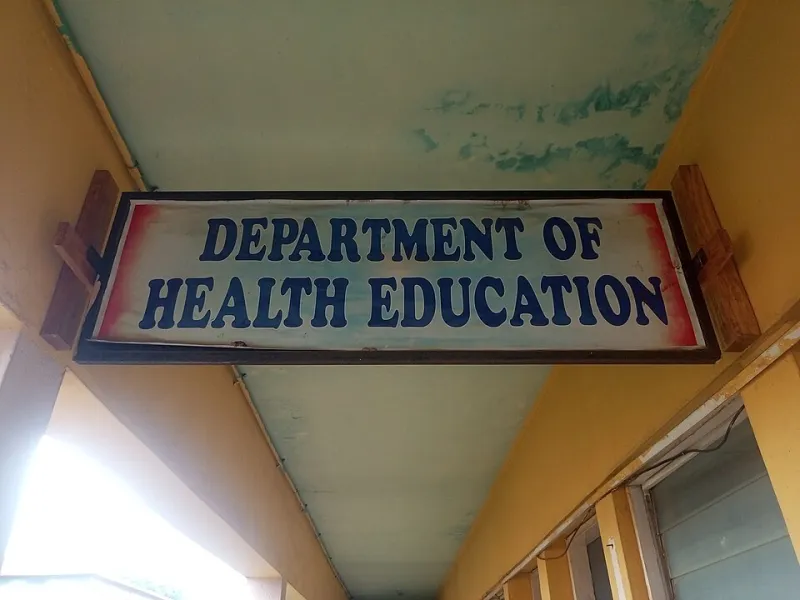
Photo: IamMKO, CC0, via Wikimedia Commons
When a seasoned nursing faculty member with fifteen years of clinical and instructional experience submits a resignation letter, the immediate conversation tends to center on replacement. How quickly can the position be posted? Who is available to cover the course load? What adjunct pool can absorb the gap? These questions, while operationally necessary, obscure the more urgent issue: the conditions that made departure feel like the only reasonable option.
Across Florida's health education landscape—spanning community colleges, state universities, private allied health programs, and hospital-based training centers—educator attrition has quietly become one of the sector's most corrosive challenges. The departures rarely make headlines. They accumulate slowly, one resignation at a time, until programs discover they are running on institutional memory held by a shrinking core of faculty who are themselves approaching their own breaking points.
Understanding why this is happening, and what a small number of forward-thinking institutions are doing differently, is no longer optional for program administrators who take educational quality seriously.
The Architecture of Exhaustion
Burnout among health educators in Florida does not typically arrive as a sudden crisis. It is the product of compounding pressures that, individually, might seem manageable—but in combination, create conditions that erode even the most committed professional's capacity to continue.
Teaching loads remain one of the most frequently cited contributors. In many programs, particularly those at under-resourced institutions or in high-demand clinical fields such as respiratory therapy, radiologic technology, and practical nursing, faculty are expected to carry course loads that exceed reasonable instructional limits while simultaneously maintaining clinical currency, advising students, serving on accreditation committees, and fulfilling community engagement obligations. The expectation that a single educator can perform at a high level across all of these domains—without structural support or protected time—reflects a fundamental misunderstanding of what sustainable academic work actually requires.
Compensation presents a parallel problem. Health education faculty in Florida frequently earn salaries that trail both clinical practice wages and the compensation offered by comparable programs in other states. For professionals who have invested years in advanced clinical training, the financial calculus of remaining in an academic role becomes increasingly difficult to justify, particularly as healthcare employers continue to offer competitive signing bonuses and flexible scheduling. When the economic incentive to leave outweighs the professional satisfaction of staying, institutions should not be surprised by the outcome.
Administrative burden compounds both of these pressures. Accreditation documentation, learning management system maintenance, outcome reporting, and compliance tracking have expanded significantly over the past decade—often without a corresponding reduction in teaching responsibilities or the addition of dedicated administrative support. Educators who entered the profession to teach, mentor, and advance health knowledge find themselves spending disproportionate hours on tasks that feel disconnected from their core purpose.
Finally, limited research support and professional development resources leave many Florida health educators feeling professionally stagnant. Without access to protected research time, travel funding, or mentorship structures, the scholarly dimension of academic life atrophies—reducing both job satisfaction and the institutional knowledge base that benefits students.
What Departure Actually Costs
The financial argument for addressing these conditions is more straightforward than many administrators acknowledge. Replacing a single experienced health educator typically costs an institution between one and two times that individual's annual salary when recruitment, onboarding, orientation, and the productivity gap during transition are factored in. In specialized fields with shallow candidate pools—dental hygiene, surgical technology, health information management—replacement timelines can stretch to a year or longer, during which program quality and accreditation standing may be placed at risk.
Beyond direct replacement costs, high faculty turnover disrupts the mentorship relationships that support student success, weakens the institutional relationships with clinical partners that take years to develop, and signals to prospective students and accreditors alike that a program is struggling. The reputational consequences of chronic instability are difficult to quantify but very real in a competitive educational marketplace.
Investing in educator sustainability, viewed through this lens, is not a human resources luxury. It is an economic imperative with direct implications for program viability.
Programs Charting a Different Course
A growing number of Florida institutions have begun to recognize this reality and are redesigning educator roles accordingly. Their approaches vary, but several common principles emerge.
Role differentiation and workload calibration. Some programs have moved away from the assumption that every faculty member must perform every function at the same level simultaneously. By distinguishing between teaching-intensive, research-focused, and clinical liaison roles—and allowing faculty to align with the work that matches their strengths and career stage—these institutions have reduced the diffuse overload that drives burnout without sacrificing program breadth.
Structured protected time. Several programs have formalized protected hours within the academic calendar for scholarship, curriculum development, and professional renewal. Rather than treating these activities as something faculty should pursue in whatever time remains after other obligations are met, they are built into workload agreements as legitimate and expected components of the role.
Administrative redistribution. Institutions that have invested in dedicated program coordinators, accreditation support staff, and instructional design professionals report measurable reductions in the administrative burden carried by teaching faculty. The upfront cost of these positions is frequently offset by reduced turnover within two to three years.
Transparent compensation benchmarking. A smaller but notable group of programs has conducted formal salary benchmarking against both peer institutions and clinical market rates, then used those findings to make the case to governing boards for targeted compensation adjustments. This approach requires institutional courage and clear data—but the programs that have pursued it report improved recruitment outcomes and a reduction in mid-career departures.
Mentorship and peer community structures. Newer faculty are particularly vulnerable to early-career burnout when they lack access to experienced colleagues who can normalize challenges and offer practical guidance. Programs that have built formal mentorship structures—with protected time for mentor-mentee engagement—report stronger retention among faculty in their first three to five years.
A Strategic Imperative for Florida Health Education
Florida's health workforce pipeline depends, more directly than is often acknowledged, on the stability and vitality of its health education workforce. Every educator who leaves the profession takes with them clinical expertise, pedagogical knowledge, and student relationships that cannot be instantly replicated. Programs that treat faculty wellbeing as a structural design problem—rather than an individual resilience challenge—are not only doing right by their educators. They are protecting the integrity of the educational mission itself.
The institutions profiled above did not arrive at sustainable models by accident. They made deliberate choices to examine the conditions they were creating, acknowledge where those conditions were failing, and invest in redesign. That process is neither simple nor inexpensive. But the alternative—continuing to lose experienced educators to burnout and better offers, then scrambling to fill the gaps—is far more costly in every meaningful sense.
For Florida's health education community, the question is no longer whether educator sustainability deserves serious attention. The question is which institutions will act before the departures become irreversible, and which will wait until the damage forces their hand.