Screens, Swipes, and Simulations: Reimagining Health Education for Florida's Digital Generation
Photo: MaryinPink, CC BY-SA 4.0, via Wikimedia Commons
For decades, the standard health education classroom looked remarkably consistent: a textbook, a worksheet, and perhaps a laminated poster illustrating the food pyramid. That model served its purpose for generations of students who had few competing demands on their attention. Today's learners, however, are different in ways that are not merely anecdotal. Generation Z — broadly defined as those born between 1997 and 2012 — arrived in classrooms already fluent in digital interaction. For Florida's health educators, that reality demands a substantive rethinking of both content delivery and student engagement.
Across the state, a growing number of institutions are answering that challenge with creativity and intention. The results, while still emerging, offer meaningful lessons for any program willing to invest in change.
Why Traditional Methods Are Losing Ground
The disconnect between conventional health education and the expectations of today's students is not simply a matter of preference. Research consistently demonstrates that learners who are accustomed to interactive, on-demand information environments disengage more readily from passive, lecture-driven instruction. In health education specifically, that disengagement carries real consequences: students who do not absorb foundational knowledge about nutrition, mental wellness, sexual health, and chronic disease prevention are less equipped to make informed decisions throughout their lives.
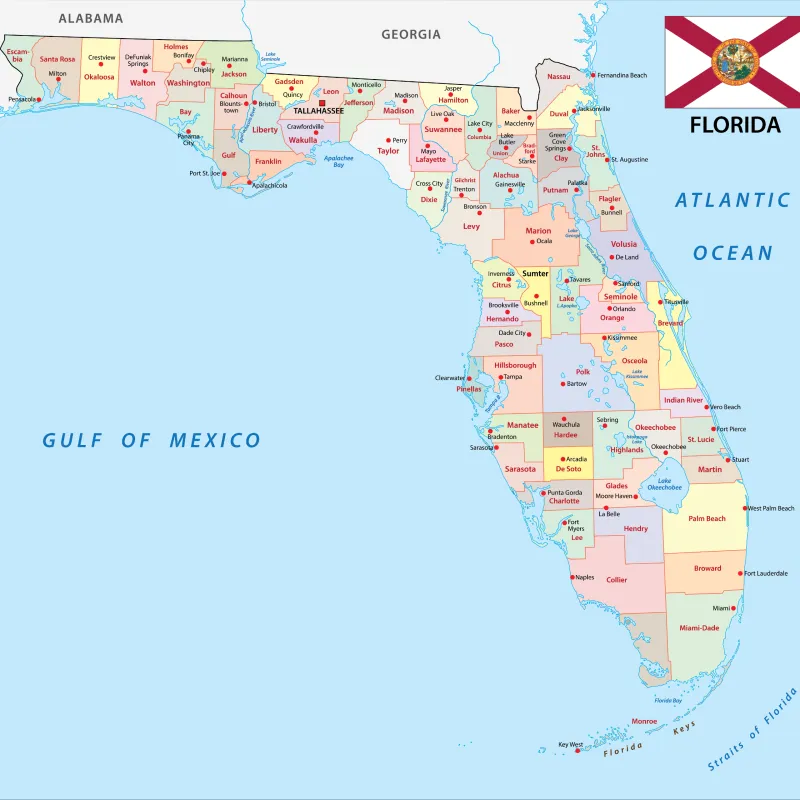
Florida presents a particularly urgent context. The state's diverse population — spanning urban centers like Miami and Jacksonville, suburban corridors in the Tampa Bay area, and rural communities throughout the Panhandle and agricultural regions — means that health outcomes vary dramatically by geography, socioeconomic status, and cultural background. A one-size-fits-all instructional approach was never truly adequate, and in an era of digital saturation, it is even less so.
Virtual Reality in the Classroom: More Than a Gimmick
Several Florida institutions have begun piloting virtual reality (VR) as a component of health education, and early outcomes suggest the technology offers genuine pedagogical value when deployed thoughtfully. At a career and technical education center in the greater Orlando area, nursing students use VR simulations to navigate patient triage scenarios that would otherwise require costly clinical placements. Instructors report that students demonstrate measurably higher retention of procedural knowledge following VR-based practice compared to traditional case-study review.
The appeal of VR extends beyond clinical training. In secondary school settings, immersive simulations have been used to illustrate the physiological effects of substance use, placing students in first-person scenarios designed to build empathy and understanding without glorifying harmful behavior. The key distinction educators consistently emphasize is intentionality: VR should supplement and reinforce learning objectives, not serve as entertainment with a thin educational veneer.
Cost remains a significant barrier. Headsets and the software ecosystems that support them require capital investment that many under-resourced districts cannot readily absorb. Grant funding from state workforce development initiatives and federal Title IV allocations has helped some programs get started, but sustainability beyond initial funding cycles is an ongoing concern.
Mobile Applications and the Micro-Learning Model
Not every institution requires high-cost technology to modernize its approach. Mobile applications have democratized access to interactive learning in ways that are particularly relevant for health education. Several Florida community colleges have integrated curated app-based learning modules into their allied health prerequisite courses, allowing students to engage with anatomy, pharmacology basics, and patient communication skills during commutes, lunch breaks, or study sessions outside of formal class time.
This micro-learning model — delivering content in short, focused bursts rather than extended lectures — aligns closely with the attention patterns of younger students without abandoning rigor. Instructors who have adopted this approach emphasize that the apps themselves are not the curriculum; they are a delivery mechanism. The learning objectives, assessments, and critical thinking components must still be designed and overseen by qualified educators.
Flahec Network has observed growing interest among member institutions in identifying vetted, educationally sound applications that align with state health education standards. Developing a shared resource library of approved digital tools represents one concrete way the network can support its members in navigating an increasingly crowded marketplace of educational technology products.
Social Media as a Curricular Bridge
Perhaps no digital shift has been more contested — or more consequential — than the integration of social media into formal health education. Critics raise legitimate concerns about misinformation, data privacy, and the blurring of professional and personal boundaries. Proponents argue that ignoring the platforms where young people already consume health information is itself an abdication of educational responsibility.
A middle path is emerging in several Florida programs. Rather than directing students to public-facing platforms, some instructors have designed closed, course-specific social media environments where students analyze, evaluate, and respond to health content they encounter in their daily digital lives. In one notable example from a South Florida high school health class, students were tasked with identifying misleading nutritional claims circulating on popular short-form video platforms, then constructing evidence-based counter-narratives using the same format. The exercise developed both health literacy and media literacy simultaneously — two competencies that are increasingly inseparable.
Practical Guidance for Institutions Ready to Evolve
For programs considering a technology-forward approach, several principles have emerged from the experiences of Florida's early adopters.
Start with learning objectives, not tools. The most effective implementations begin with a clearly articulated educational goal and then identify which technology, if any, best serves that goal. Adopting a platform because it appears innovative without grounding it in specific outcomes is a common and costly mistake.
Invest in educator training. Technology adoption that outpaces instructor comfort and competency undermines the entire endeavor. Professional development opportunities — including those offered through FLAHEC Network's regional programming — are essential for building the capacity to use new tools effectively.
Engage students as co-designers. Several Florida programs have found that involving students in the selection and evaluation of digital tools increases both buy-in and effectiveness. Students who understand why a particular platform was chosen, and who have had input into its implementation, demonstrate greater engagement and more critical use of the technology.
Plan for equity from the outset. Digital tools are only as equitable as the access students have to them. Any technology integration strategy must account for students without reliable home internet access, those who share devices with family members, and those whose primary language is not English.
Looking Forward
The shift toward technology-integrated health education is not a trend that will recede. As the students entering Florida's health education programs grow younger and their digital fluency deepens, the gap between traditional instruction and effective engagement will only widen for institutions that fail to adapt. The challenge — and the opportunity — for Florida's health educators is to harness the genuine power of digital tools without allowing novelty to substitute for substance. The state's health outcomes depend, in no small part, on getting that balance right.